
(WKL200) Newcastle College University Assignment Help | Work Based Learning
The Newcastle College University WKL200 Work Based Learning module enables students to apply academic knowledge in real workplace environments while developing practical and professional skills. Unlike traditional assessments, this module requires learners to complete a work-based project, analyse organisational challenges, and present evidence-based solutions supported by academic research.
Many students find this assessment demanding because it combines project planning, workplace investigation, reflective learning, research methodology, report writing, and professional documentation within a single module. From selecting a suitable project to submitting the final report, every stage requires careful planning and critical evaluation.
At Jira Assignment, we provide expert academic support for students studying Work Based Learning modules across UK universities. Our specialists assist with project proposals, feasibility studies, reflective reports, literature reviews, Harvard referencing, project documentation, and final report preparation to help students meet university assessment standards.
Highlights
- Understanding the Newcastle College University WKL200 Work Based Learning Module
- Weekly Learning Journey
- Common Challenges Students Face
- Skills Developed Through WKL200 Work Based Learning
- Benefits of Professional WKL200 Assignment Help
- Why Choose Jira Assignment?
- Conclusion
- Related Assignment Help Services
Understanding the Newcastle College University WKL200 Work Based Learning Module
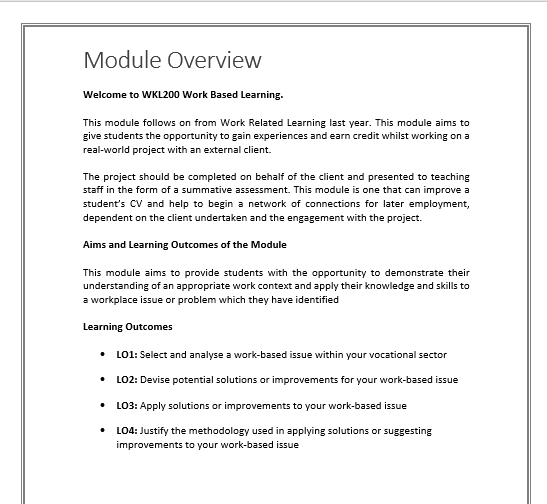
The WKL200 Work Based Learning module focuses on integrating academic learning with professional workplace experience. Students complete an individual project that addresses a genuine organisational challenge while demonstrating research, analytical, communication, and project management skills.

Throughout the module, students are expected to plan, develop, implement, evaluate, and reflect upon their chosen project while maintaining professional standards of documentation and academic writing.
Core areas covered within the module include:
- Workplace project planning
- Research and investigation
- Project feasibility analysis
- Scope and requirement definition
- Project management
- Risk management
- Reflective learning
- Evidence collection
- Professional report writing
- Harvard referencing
Completing the assessment successfully requires both academic understanding and the ability to apply theoretical concepts within practical workplace environments.
Weekly Learning Journey
The WKL200 module follows a structured learning schedule that guides students from project planning to successful completion.
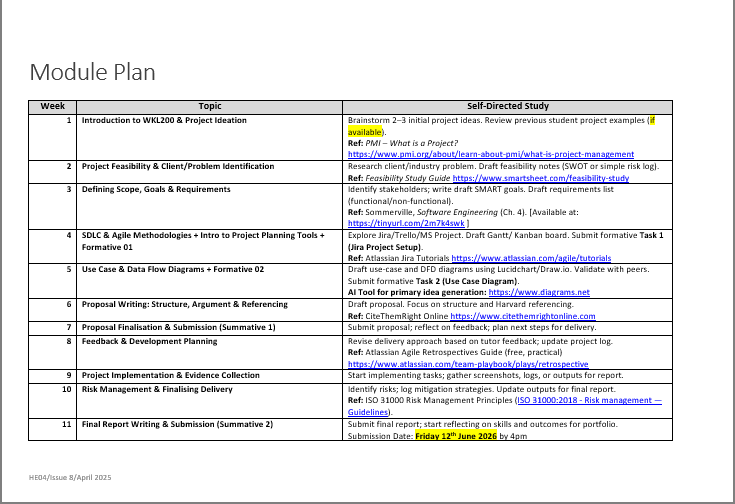
Week 1: Introduction to WKL200 and Project Ideation
Students begin by understanding the module requirements, assessment criteria, and learning outcomes. This stage focuses on identifying a realistic workplace project that aligns with organisational objectives and academic expectations.
Students explore potential project ideas, consider available resources, and select a topic that offers opportunities for research, implementation, and evaluation.
Week 2: Project Feasibility and Client or Problem Identification
Project feasibility determines whether the proposed project can realistically be completed within the available timeframe and available resources.
Students focus on:
- Identifying organisational challenges
- Understanding stakeholder expectations
- Conducting preliminary research
- Assessing project feasibility
- Defining client requirements
A well-prepared feasibility study creates a strong foundation for successful project delivery.
Week 3: Defining Scope, Goals and Project Requirements
Clearly defining project boundaries helps students avoid unnecessary complexity and ensures the project remains achievable.
Students define:
- Project objectives
- Scope of work
- Expected deliverables
- Functional requirements
- Project milestones
- Success criteria
A clearly defined scope improves project planning and reduces implementation risks.
Week 4: SDLC, Agile Methodologies and Project Planning Tools
Professional project management techniques play an important role throughout the assessment.
Students develop an understanding of:
- Software Development Life Cycle (SDLC)
- Agile methodologies
- Scrum framework
- Work Breakdown Structure (WBS)
- Gantt Charts
- Project scheduling tools
Applying recognised project management approaches demonstrates professional planning skills and supports successful project execution.
Week 5: Use Case Diagrams and Data Flow Diagrams
Visual modelling techniques improve communication between stakeholders and provide a clear understanding of project requirements.
Students prepare:
- Use Case Diagrams
- Data Flow Diagrams (DFDs)
- Process models
- Functional specifications
- System interaction diagrams
These diagrams help explain how the proposed solution will operate within the organisational environment.
Week 6: Proposal Writing
A strong project proposal demonstrates academic understanding while presenting a practical solution to the identified workplace problem.
The proposal normally includes:
- Project background
- Problem statement
- Research objectives
- Literature review
- Research methodology
- Expected outcomes
- Harvard references
Well-structured proposals supported by credible academic sources often achieve stronger assessment results.
Week 7: Proposal Finalisation and Submission
Before submitting the proposal, students review the document to ensure it satisfies all assessment requirements.
The proposal should demonstrate:
- Clear objectives
- Strong academic research
- Logical project planning
- Professional presentation
- Accurate Harvard referencing
Tutor feedback received after submission provides valuable opportunities for further improvement.
Week 8: Feedback and Development Planning
Constructive feedback allows students to refine their project before implementation begins.
Students evaluate tutor recommendations, identify areas requiring improvement, and develop an action plan that strengthens project delivery.
Week 9: Project Implementation and Evidence Collection
Project implementation transforms planning into practical workplace activities.
Students collect evidence throughout implementation, including:
- Meeting records
- Progress reports
- Workplace documentation
- Screenshots
- Survey responses
- Client feedback
Comprehensive evidence strengthens the credibility of the final report.
Week 10: Risk Management and Finalising Project Delivery
Managing project risks is essential for successful completion.
Students analyse:
- Project risks
- Resource constraints
- Time management
- Quality assurance
- Risk mitigation strategies
- Performance monitoring
Effective risk management demonstrates professional project management skills.
Week 11: Final Report Writing and Submission
The final report summarises the complete project while critically evaluating outcomes and professional development.
A comprehensive report generally includes:
- Introduction
- Project overview
- Research findings
- Project implementation
- Evidence of outcomes
- Critical evaluation
- Personal reflection
- Recommendations
- Conclusion
- Harvard reference list
A professionally written report demonstrates both academic achievement and workplace competence.
Common Challenges Students Face
Many students encounter difficulties throughout the WKL200 assessment because it combines academic research with practical workplace application.
Common challenges include:
- Choosing an appropriate workplace project
- Defining realistic project objectives
- Managing project timelines
- Conducting effective academic research
- Collecting workplace evidence
- Applying project management methodologies
- Writing reflective reports
- Maintaining Harvard referencing standards
- Producing professional documentation
Overcoming these challenges requires careful planning, continuous evaluation, and effective time management.
Skills Developed Through WKL200 Work Based Learning
The module develops practical skills that improve graduate employability across multiple industries.
Students strengthen their abilities in:
- Project management
- Leadership
- Critical thinking
- Communication
- Teamwork
- Research and analysis
- Problem-solving
- Decision-making
- Professional writing
- Time management
These transferable skills prepare students for successful careers in professional environments.
Benefits of Professional WKL200 Assignment Help
Professional academic support helps students better understand module requirements while improving the quality of their assessments.
Students commonly seek assistance with:
- Project proposal writing
- Workplace research
- Literature reviews
- Reflective reports
- Risk assessments
- Project planning
- Harvard referencing
- Proofreading and editing
- Final report preparation
Expert guidance allows students to produce well-structured assignments that satisfy university assessment criteria.
Why Choose Jira Assignment?
Jira Assignment provides specialist academic support for students studying business, information technology, project management, engineering, and Work Based Learning modules.
Our services include:
✅ Work Based Learning Assignment Help
✅ Project Proposal Writing
✅ Literature Review Assistance
✅ Reflective Report Writing
✅ Harvard Referencing
✅ Professional Proofreading
✅ Original and Plagiarism-Free Work
✅ On-Time Delivery
✅ Experienced UK Assignment Experts
Our experts understand UK university assessment requirements and deliver professionally structured assignments that demonstrate critical thinking, academic research, and practical workplace knowledge.
Conclusion
The Newcastle College University WKL200 Work Based Learning module enables students to combine academic learning with practical workplace experience through project planning, implementation, evaluation, and professional reflection. Successfully completing the module requires strong research, project management, communication, and analytical skills. With proper preparation and expert academic guidance, students can confidently produce high-quality assignments while developing valuable workplace competencies for future career success.
Related Assignment Help Services
Students searching for Newcastle College University WKL200 Work Based Learning Assignment Help may also be interested in:
- Newcastle College University Assignment Help
- WKL200 Assignment Help
- Work Based Learning Assignment Help
- Project Proposal Writing Help
- Reflective Report Writing Help
- Workplace Project Assignment Help
- Risk Management Assignment Help
- Project Management Assignment Help
- Harvard Referencing Help
- UK University Assignment Help
- Academic Report Writing Help
- Coursework Writing Help